Skip to content
Home

Young people play soccer in the Taquari neighborhood in Rio Branco, Acre in Brazil. During August, September and October, the Amazon region historically suffers from urban and forest fires, filling the skies with smoke. Credit: Victor Moriyama / Climate Visuals

Navigation breadcrumbs

  1. Black Carbon Hub
  2. Why black carbon?

Why black carbon?

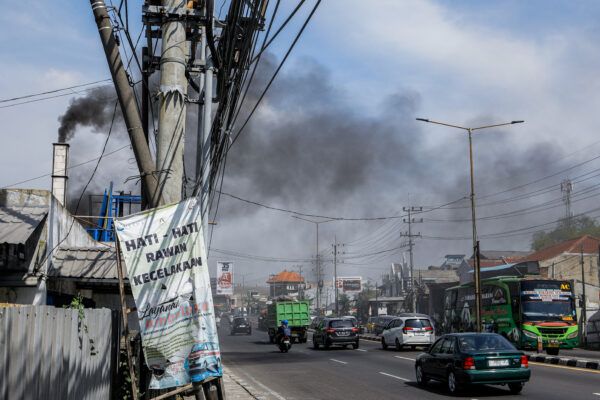
Black carbon, or soot, is one of the short-lived climate pollutants, or super pollutants, that are collectively responsible for half of global warming. Black carbon also pollutes the air, contributing to the millions of premature deaths from fine particulate matter and billions of economic costs each year.

Clean Air Fund’s programme is driving action to reduce black carbon globally. We’re generating scientific research, building coalitions and implementing solutions to cut emissions.

A global problem felt close to home

Black carbon is a potent super pollutant that contributes to climate change, dirty air, premature deaths and economic losses.
1/2
of global temperature increase is attributed to super pollutants, like black carbon and methane
0.14°C
of warming could be avoided by 2050 through targeted action on black carbon and tropospheric ozone. Source: PNAS
Explore further

Solutions

Find out the most effective interventions to target the super pollutant and realise rapid benefits for people and planet.

Projects and organisations taking action

See the latest efforts to reduce black carbon, from a range of organisations.

Resources

Get the latest evidence, research and expertise on black carbon, as well as policy recommendations and communications tools to support action.

Clean Air Fud's wider work on climate change

Air pollution and climate change are mainly caused by burning fossil fuels - and they share many of the same solutions. Cleaning our air is one of the most immediate ways to protect the planet.