12 December 2025
The problem: Children are most affected by pollution
Worldwide, more than 90 percent of children breathe polluted air every day. Children are especially vulnerable to air pollution – due both to their physiology, and to the type and degree of their exposure. Nearly 2,000 children under five die every day from air pollution-related health issues.
Burning fossil fuels like oil, gas, and coal is the principal source of air pollution. This burning is also the cause of the climate crisis, which both harms children today, and destroys the planet they depend on.
Leaders in government and businesses are not yet acting on climate change and air pollution with the urgency children deserve. Likewise, though public concern is growing, many parents are not fully aware of the profound implications of dirty air and climate change for their children’s health.
The solution: Parental love as a catalyst for tackling air pollution
Parents, grandparents and caregivers have a huge stake in ensuring that children are healthy and can look forward to a thriving future. Our Kids’ Climate strengthens the emotive, moral, unstoppable power of parents, carers and families to create change.
Parental love is a superpower – and research shows love for children and future generations is a proven and potent motivator. According to a study of 23 countries by Potential Energy in 2023, love for the next generation is the top reason people give for taking action on climate change.
My son’s persistent coughs opened my eyes. As a technician and a parent, I saw how pollution from our vehicles was harming our kids’ health, and I knew I had to act. Not just for him, but for every child breathing this toxic air. In Uganda and maybe, most parts of Africa, our vehicles are mostly used and poorly maintained, they are very old, and they emit a lot of toxic smoke, especially in areas where our children live, walk and go to school. I train local mechanics, especially those working in informal settings, to learn sustainable vehicle maintenance practices. We collect emissions data and educate the public. Our goal is cleaner vehicles, informed communities and stronger policies. It’s a bottom-up approach that puts environmental health first.
Michael Wanyama, Founder of Autosafety Uganda
Through fellowships, microgrants, and community programs, Our Kids’ Climate provides support to parents fighting for clean air and taking climate action in their communities.
It also brings determined mothers together during global moments, like COP Conferences, to advocate for children with heart and emotion, making connections between fossil fuels, the climate crisis, and children’s health.
Many parents worry about poor air quality but there’s not enough awareness about how it harms children’s health. This is why we organise clean air workshops: to shed light on this silent killer — air pollution — and to share practical ways parents can protect their children and adopt habits for cleaner air. This year, we created a Family-Led Clean Air Observatory to provide families with information about the pollution levels near them using air quality monitors. The air monitors have been installed in and near schools, childcare centres, parks, and sports areas where children spend significant time. This data is empowering families to protect themselves and their children from pollution, and encouraging them to advocate for policies that safeguard the air children breathe.
Ana Badillo, Pacha Ayllu – Families for Future Ecuador
The organisation has also created a Clean Air Circle of seven women grassroots leaders from diverse countries, to steer and inform its campaigning work on clean air. The Circle helps generate campaign ideas and roots global campaigns in local realities and experiences. It also helps spark fresh ideas for local campaigning through creative exchanges between parents in different geographies.
The impact: Linking local and global voices for healthier futures
Our Kids’ Climate delegations of mothers have repeatedly had an outsized impact at global moments as a vocal, heart-felt presence in frenetic, often technical policy spaces.
At COP26, mothers met the COP President Alok Sharma, delivering a letter signed by almost 500 parent groups from 44 countries calling for the end of new fossil fuels for the sake of children’s health and futures. At COP30, a powerful delegation of Brazilian mothers brought children’s health and care to the heart of the summit through panels and events at the conference and on the streets of Belém.
We are bringing the emotion and the heart. Unless you connect with people emotionally, they are not going to move or be brave. All of these world leaders ultimately have a heart and that’s what we’re trying to pierce. Mothers bring relentless determination because you will do anything for your kids and we’re not going to give up or go away.
Maya Mailer, Co-Director for Our Kids’ Climate
During the Summit of the Future in September 2024, Our Kids’ Climate released an open letter by 150 notable parents from the arts, entertainment, sport, science, civil society, and business, calling on leaders to end the world’s dangerous dependence on fossil fuels. Parents signing included Angelique Kidjo, Mo Farah, Christiana Figueres, Dame Emma Thompson, Paul Polman, Dr Maria Neira, and Mayor of Freetown Yvonne Aki-Sawyerr.
In March 2025, mothers from Ecuador, India, South Africa, USA/Puerto Rico, and the UK brought children’s stories and experiences of air pollution to the heart of the WHO Conference on Air Pollution and Health in Cartagena, Colombia.
Climate change doesn’t wait for conferences. It is already inside homes, bodies, and routines across the Amazon – in the heavy smoke from forest fires that fills children’s lungs, and in urban rivers that lose their life and carry sewage instead of a future. And this is not unique to the Amazon – it mirrors what so many places are facing, where childhood is already feeling a growing crisis. We keep raising our voices, because clean air to breathe and clean rivers to play in are not promises – they are rights. We move forward together, because protecting the Amazon – its forests, its waters, its cities – means protecting the future of all children, today.
Catarina Nefertari, Amazônia de Pé, and member of OKC’s COP30 delegation
The network has a unique power to link the local to the global. Ahead of the WHO conference, parents took to the streets in 20 towns and cities in 13 countries across six continents, supporting the mothers’ delegation, and calling for urgent action on air pollution for children everywhere.
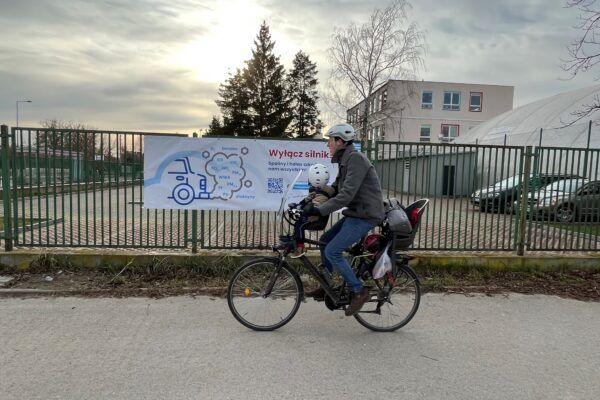
Through its grassroots connections, Our Kids’ Climate is also able to catalyse and support innovative clean air campaigning in local communities. From Ecuador’s first-ever citizen-led air monitoring project to clean air programs in Polish schools, to training mechanics in Uganda about air quality, parent organisers are a determined and creative force for change in their communities across the globe.