Blog 11 May 2026
Why does black carbon matter?
When we talk about climate change, carbon dioxide and methane emissions tend to rightly dominate the conversation. But another pollutant, black carbon or ‘soot’, is exacerbating near‑term climate risks and isn’t getting the attention needed from policymakers and scientists.
Black carbon plays a unique and complex role in the earth’s climate system, which has contributed to the super pollutant being under-addressed in climate science and policy. While carbon dioxide and methane emissions warm the planet by trapping heat over decades to centuries, black carbon particles absorb sunlight and heat the atmosphere for days to weeks. As well as contributing to global warming, these particles affect monsoon patterns, disrupt rainfall, and darken snow and ice, accelerating melting. These visceral effects are intense but very short-lived, meaning reducing emissions can deliver rapid climate and health benefits.
New evidence on black carbon’s impacts
A major new review led by Örjan Gustafsson from Stockholm University, published in Nature Reviews Earth & Environment, brings together the most comprehensive assessment to date of what we know — and where key uncertainties remain — about black carbon’s role in the climate system. This review arrives ahead of the Intergovernmental Panel on Climate Change (IPCC) 2027 Methodology Report on Inventories for Short-Lived Climate Forcers and IPCC’s Seventh Assessment Report, making its findings particularly timely and useful.
This review matters not because it radically revises black carbon’s role in climate change, but because it clarifies where and why current assessments are likely biased. By systematically comparing climate modelling against ground-based and satellite measurements across regions, it shows that black carbon’s climate effects are often misrepresented. For example, across major emitting regions, models tend to underestimate atmospheric concentrations and light absorption, while overestimating deposition (how particles transfer from the atmosphere to the earth). This leads to a systematic bias in how black carbon’s heating effects are represented.
This has direct implications for near‑term climate planning, regional mitigation priorities, and the credibility of estimates used in the upcoming IPCC assessments and other policy efforts. If black carbon’s impacts are misrepresented, opportunities for rapid climate and health gains risk being overlooked.
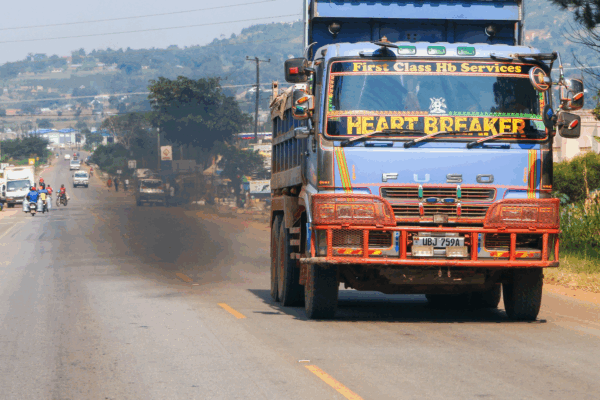
The review also finds that black carbon emissions are unevenly distributed globally. Around 90% and 50% of emissions come from biomass burning in sub-Saharan Africa and South Asia, respectively. In East Asia, fossil fuel burning is the dominant source of emissions. The review shows that air quality policies have led to significant declines across Europe, North America and parts of East Asia, highlighting the potential of cutting emissions in high-emitting regions.
What we need from policymakers and scientists
The good news is that solutions already exist. Black carbon emissions can be reduced through numerous measures, from cleaner household energy and transport controls to improved industrial practices and reductions in open burning of biomass and waste. Because emissions are highly regional and source specific, action can be tailored to local contexts while delivering global benefits.
The real bottleneck is not a lack of mitigation options, but weak evidence pipelines linking measurements to the tools policymakers use. Black carbon needs to be recognised as a driver of climate change. In particular, we need to see:
- More research and data funding, including supporting more intensive collaboration among the scientific community to address model versus observation discrepancies and further advances in the understanding of black carbon’s physical properties and how it interacts with snow and ice, clouds and atmospheric processes.
- Integration of black carbon into climate and air quality frameworks, for example, building on the High-Level Announcement on Sectoral Action on Black Carbon at COP31 and integrating black carbon more strongly within regional air quality frameworks such as the Gothenburg Protocol and Malé Declaration.
- Embedding black carbon in national plans and policies to support integrated action on climate and clean air, including inclusion of black carbon targets in national air quality plans and climate plans (also known as nationally determined contributions or NDCs), intensive national-level efforts on black carbon monitoring, emission inventories and sectoral emission reductions.
Clean Air Fund’s super pollutants programme is generating scientific research, building coalitions and implementing solutions to cut black carbon emissions. Check out our Black Carbon Hub for the latest evidence, resources and news on the super pollutant, as well as the latest efforts and solutions from the climate and clean air communities.