News 16 November 2026
Mexico, Panama and Cambodia have today joined an international coalition to combat the impacts of black carbon on the environment. The Network aims to coordinate international action on black carbon and create a space for countries to learn best practice from one another.
The Minister of Environment for Cambodia, said joining the Network will help exchange new ideas with other member countries as the country faces down threats including from the Super El Niño. Panama’s Minister of Environment emphasised the vital importance of tackling black carbon for climate change and air quality, describing a key source of black carbon in Panama as being heavy duty vehicles.
And José Abraham Ortínez Álvarez, Mexico’s General Director of the National Institute of Ecology and Climate Change, highlighted how Mexico was the first country to integrate black carbon into its national climate plan (NDC), targeting a 51% reduction by 2030, and discussed the importance of exchanging ideas and best practice from other nations facing similar issues. He also cited transport and cooking as being particularly important sources of black carbon emissions in Mexico, which they hope can be better tackled as part of the Network.
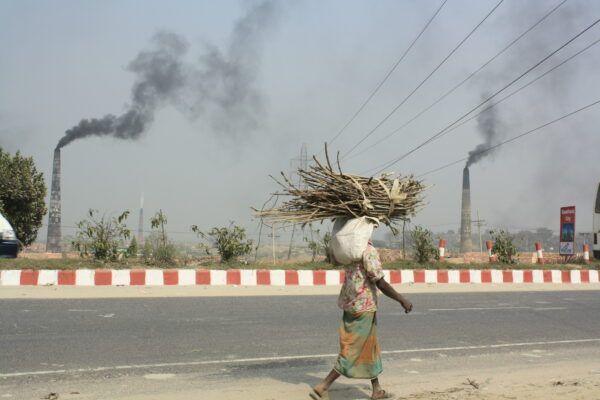
Black carbon (or ‘soot’) is a super pollutant which causes negative health impacts like lung disease and asthma, as well as contributing to half of global warming along with other super pollutants. It is emitted from sources like residential energy, wildfires, waste burning, transport and shipping.
The three new countries join nine others who currently make up the Peer Network on Sectoral Action on Black Carbon. Over the past year, existing members of the Network have taken a range of actions to tackle the pollutant. Canada, for example, has launched a new electrification strategy, Nigeria has included measures to tackle agricultural burning and promote clean cooking in their national climate plan, and Uganda is currently developing a ‘National Black Carbon Action Plan’ (see Notes for more).
The addition of these three new countries to the Network follows further progress on super pollutants at COP31 on Thursday 12 November with US$480 million announced to tackle super pollutants, and an additional $25 million for national programmes on super pollutants. On the same day, Nepal’s Minister of Foreign Affairs, Shisir Khanal, also called for countries to curb short-lived climate pollutants, including black carbon, among a raft of other measures designed to prevent further glacier collapse. He provided a moving account of the “Himalayan Tsunami” which “claimed thousands of lives, swept away bridges, and wiped out clean hydropower plants” and “exposed the acute fragility of our cryosphere and the profound vulnerability of frontline communities whose contribution to global greenhouse emissions remains negligible.”
We are working to reduce emissions across sectors including transport, industry and waste, while improving air quality and protecting public health. With Super El Niño taking effect, Cambodia is working to prevent and address wildfires, which affect the livelihoods and safety of our vulnerable communities. Our climate plan reflects the need to address these challenges together as part of our sustainable development. Joining the Peer Network will help us exchange with others on tackling black carbon and scale up action.
H.E. Dr. Eang Sophalleth, The Minister of Environment for Cambodia
Black carbon is the absolutely worst and most pernicious sign of climate change; and the most dangerous air pollution. It must be priority one, as we fight climate change, to combat and eliminate black carbon. In Panama, 85% of black carbon is emitted by our vehicles. We must eliminate the oldest trucks, buses, and vehicles, which are the ones who pollute the most; and we will set higher cleaner standards, so as to eliminate black carbon as quickly as possible and transition into a cleaner vehicle fleet, not only in Panama, but throughout the world.
The Hon. Juan Carlos Navarro, Minister of Environment, Republic of Panama
Governments are increasingly recognising sectoral action on black carbon as an opportunity to improve our climate, health and economies. We are delighted to see Cambodia, Mexico and Panama join the Peer Network, building on incredible momentum across the Network since it was launched at COP30. Their leadership strengthens a coalition focused on sharing practical solutions, driving action across high-emitting sectors and building a powerful political case for faster action on black carbon.
Sean Maguire, Executive Director of Strategic Partnerships at Clean Air Fund
We are delighted to see the significant progress of the Peer Network in its first year and the high level of leadership and political momentum on black carbon. Clima Trust is pleased to be supporting the Peer Network and its members to share learnings, accelerate sectoral action, and access finance to tackle the sources of black carbon.
Dennis Mombauer, Director of Research and Knowledge Management, Clima Trust
Tackling black carbon is an essential part of broader action on super pollutants, delivering immediate benefits for climate, clean air and public health. The expansion of the Black Carbon Peer Network is a welcome step towards stronger international cooperation and accelerating practical solutions.
Martina Otto, Head of Secretariat for the Climate and Clean Air Coalition