Blog 16 March 2026
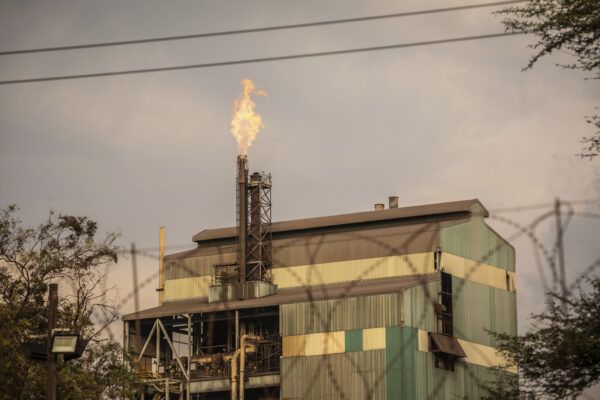
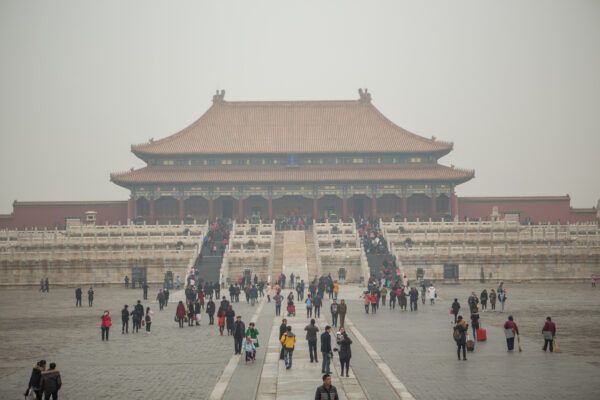
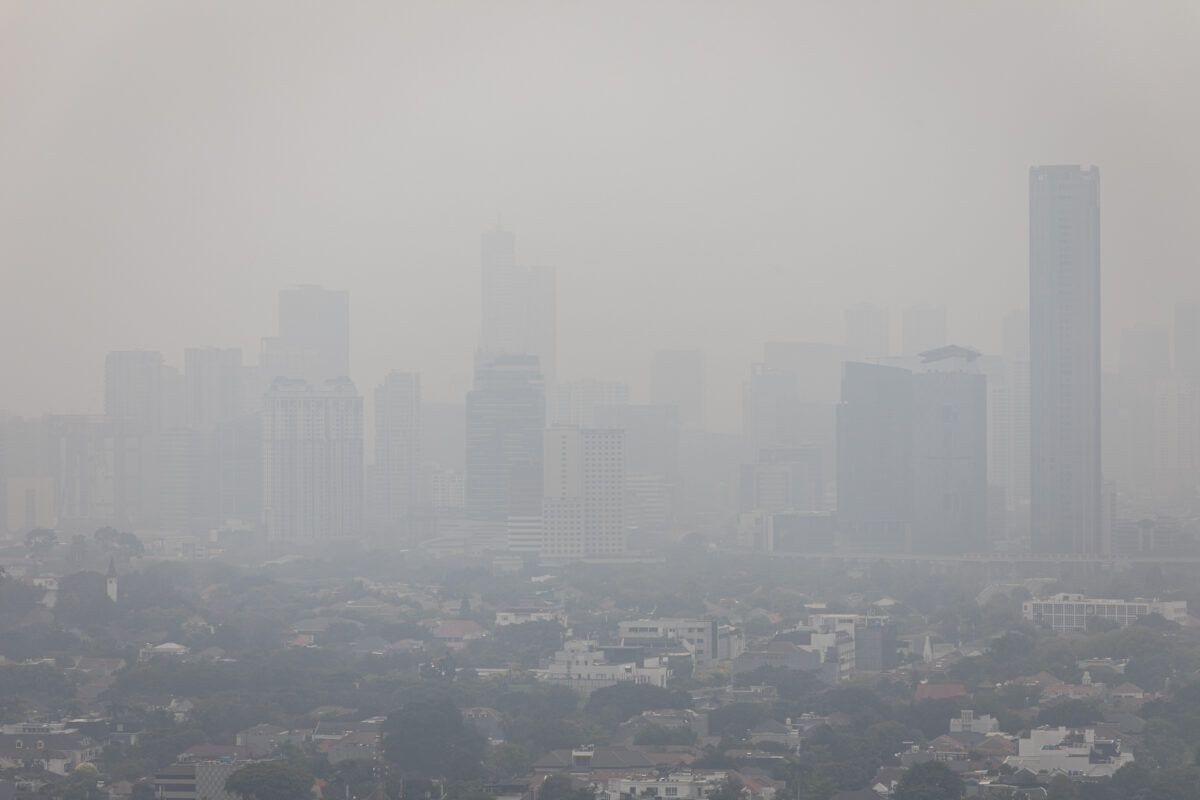
Air pollution is a major global health challenge, responsible for nearly 8 million premature deaths every year. But it also affects our climate and environment: air pollution can alter rainfall patterns, which can disrupt agriculture, river levels and forests.
Air pollution – especially fine particles known as aerosols – weakens the biophysical systems that support food security and livelihoods. Disrupted precipitation weakens local communities’ abilities to absorb environmental shocks and withstand climate change, undermining resilience.
How does air pollution change rain?
Aerosols play a crucial role in cloud formation. They act as the “seeds” (called cloud condensation nuclei) around which water vapour condenses to form droplets. Without these microscopic particles – from dust, sea salt or air pollution from burning fossil fuels or biomass – clouds would struggle to form because pure water vapour doesn’t easily turn into liquid in clean air.
But when too many aerosols are present, as in polluted environments, the cloud gets crowded with tiny droplets. This leads to the cloud becoming brighter, but its droplets are too small to merge into raindrops that would fall to the earth. Instead of raining, the cloud lingers longer, meaning it reflects more sunlight and often reduces or delays precipitation.
Air pollution doesn’t just help form clouds, it can also change how the atmosphere moves. Because pollution is unevenly spread, the higher concentrations of pollution in some parts of the atmosphere disrupt how sunlight is absorbed or reflected. That uneven heating alters temperature and pressure patterns in the air, which can shift wind patterns and move moisture away from where it’s needed. This means air pollution can reshape rainfall patterns and increase climate risks in places far from where it is emitted.
Examples from Africa and Latin America
Scientists analysing over three decades of data have found that seasonal rainfall along the densely populated West African Guinea coast has declined – a trend they partly link to rising human-made air pollution in the region. Air pollution from other parts of the world may also have contributed, as pollution alters the large-scale wind patterns, like monsoons, that bring moisture to the region.
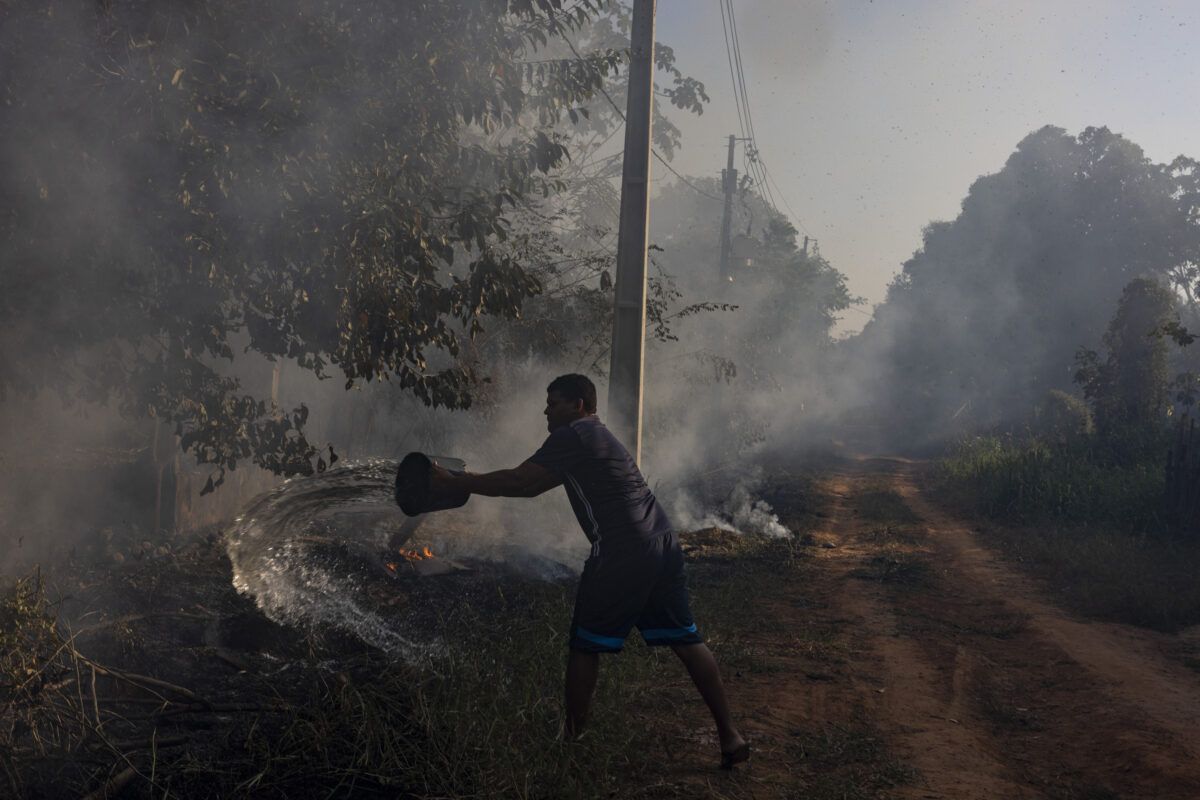
In Southern Africa, air pollution from local biomass burning may be the dominant cause of reduced precipitation. Since the 1950s, Southern Africa has experienced significant drying and diminished precipitation. The region is now facing its deepest droughts in decades, with more than 68 million people affected in recent years.
Reduced rainfall linked to biomass burning was also observed in Latin America. Air pollution from biomass burning was found to drive reduced precipitation over the Amazon, due to temperature-driven circulation changes. This decrease in rain drives considerable drying over the Amazon.
Examples from Asia
Air pollution impacts the South Asian monsoon by weakening its circulation, while decreasing rainfall intensity and frequency. A study links air pollution to a 27-43% reduction in rainfall during the South Asian summer monsoon in a normal year.
Over South-East Asia, air pollution may cause a shift in precipitation from land to ocean regions. Under heavily polluted conditions, pollution particles in the air block sunlight from reaching the ground, which cools the land down. This cooling reduces the upward movement of air over land, weakening cloud formation and decreasing rainfall.
Another recent study analysing a 35-year-long dataset found that air pollution increases heavy rain events and reduces light rain events over China. When heavy precipitation increases but light rain decreases, much of the water runs off the ground quickly instead of soaking into the soil – this causes floods rather than replenishing groundwater.
Why monsoon changes matter for billions
The monsoon is the lifeline of Asia and Africa, bringing seasonal rains that sustain over half the world’s population. Rains replenish rivers, groundwater and croplands that depend on regular rainfall cycles. Almost 40% of the working population in South Asia and 70% in major African countries is employed in agriculture, making their livelihoods dependent on rainfall. In South and East Asia, the monsoon supports staple crops like rice, while in Africa, it underpins rain-fed farming, hydropower, and grazing systems.
When air pollution changes monsoon precipitation, the rains become erratic – arriving late, falling in shorter bursts, or missing key agricultural windows. This disrupts food production, depletes water reserves, and increases the risk of droughts, crop failures and rural poverty. In short, the change itself risks the social and economic stability of entire regions.
What this means for policy and resilience
The COVID-19 lockdowns presented a unique opportunity for scientists to study the impacts of air pollution reduction on precipitation and the monsoon. A recent study indicates that the reduced emissions from human activities caused by the unprecedented COVID-19 restrictions had a favourable effect on the water cycle over South Asia. However, aerosol effects on precipitation are complex and vary by region and type, so important uncertainties remain.
When it comes to studies, precipitation trends across global south regions remain highly uncertain. Observational networks are not very dense and many research models seem to have trouble reproducing precipitation patterns. This uncertainty is particularly concerning given some regions’ high vulnerability to even modest shifts in rainfall patterns. Because rainfall changes are influenced by many different factors, attribution to a single factor is challenging. But the studies explored above suggest air pollution may be an important and overlooked factor.
To understand these scientific uncertainties, we need stronger investment in long-term monitoring networks, particularly across Africa and Asia. Advances in regional climate modelling and modelling of natural experiments, like the COVID-19 lockdowns, will be critical to quantify how emissions influence rainfall patterns.
Climate change and air pollution are not only about rising temperatures. They are also reshaping atmospheric circulation, cloud formation, and rainfall patterns in ways that matter deeply for food security, ecosystems, and livelihoods. Besides its benefits for health and economies, air pollution control needs to be treated as part of a broader resilience strategy by governments. Beyond potential influences on rainfall, reduced pollution delivers immediate benefits: cleaner air, healthier communities, and more stable ecosystems.