News 21 April 2026
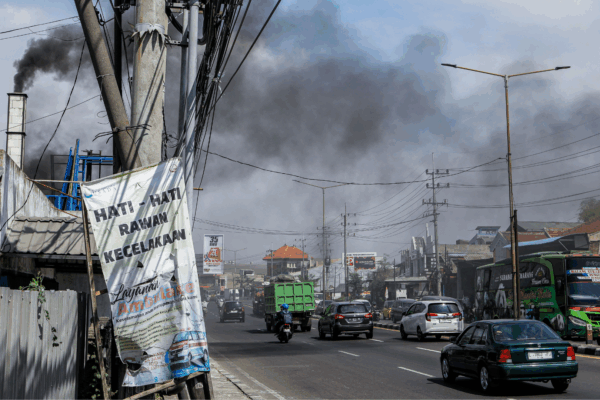
Our latest research finds that regions with the highest levels of air pollution receive the least amount of philanthropic outdoor air quality funding, despite the disproportionate impact of dirty air on people in global south countries.
Between 2019 and 2023, funding was heavily skewed towards North America, which received 35% of total outdoor air quality funding. Meanwhile, Africa and Latin America received only 1% and 2% of funding, respectively.
Our report, Philanthropic Foundation Funding for Clean Air, shows that:
- Philanthropic funding to tackle air pollution is stagnating, despite harmful air pollution being the largest environmental threat to human health. Although $478 million of philanthropic funding was directed to outdoor air quality projects between 2019 and 2023 – with investment more than doubling over the period – in 2023, funding rose by just 2%, marking a clear slowdown.
- Outdoor air quality funding currently accounts for less than 0.1% of all foundation giving globally, even though air pollution is responsible for almost 8 million premature deaths each year, with 99% of people worldwide having no choice but to breathe harmful air.
- Philanthropic giving has helped to drive vital progress over the past decade, transforming clean air into a recognised climate and health priority by strengthening data availability, inspiring policy innovation and accelerating local impacts. However, the research points to a widening gap between the urgency of the crisis and the resources dedicated to addressing it.
Philanthropic foundations have played an essential role in tackling air pollution, but we can’t afford to lose momentum on tackling this huge public health challenge. Without action from a broader range of funders, we can’t eliminate toxic air. We need more funders to recognise that clean air is fundamental to better health, a cooler climate and economic development.
Jane Burston OBE, CEO of the Clean Air Fund
While philanthropies cannot fill the entire finance gap on their own, Jane Burston highlights that the hugely impactful domino effect they create, with their investments accelerating public policy and targeted public and private finance.
The report also shows that:
- Philanthropic funding for outdoor air quality remains highly concentrated. Between 2019 and 2023, the top 10 funders contributed 52% of all philanthropic funding worldwide. The Clean Air Fund calls for philanthropies working across broader areas to recognise the wide-ranging benefits of clean air and direct funding towards it.
- Transport attracted the largest share of funding (61%), while crucial sectors like waste, agriculture and household energy remain significantly under‑invested.
- Data and implementation projects receive a comparatively small share of funding – just 10% and 9%, respectively, despite 36% of countries not monitoring air quality at all. Investments of just $4m per year in air quality data could enable pollution reduction for nearly 1 billion people, according to EPIC.
Air pollution is one of the world’s largest public health threats — and not only do we underfund it, we’re not directing the funds available to where they’re needed most. Africa has twice the population of North America and more than twice the air pollution, yet it receives 35 times less philanthropic air quality funding. Over a third of countries still don’t monitor their air quality at all. But this is a story about opportunity, not just neglect: even modest philanthropic investments in local capacity can unlock pollution reduction for nearly a billion people.
Dr Christa Hasenkopf, Senior Clean Air Fellow at the Clean Air Fund