Research report
Philanthropic Foundation Funding for Clean Air 2026
21 April 2026
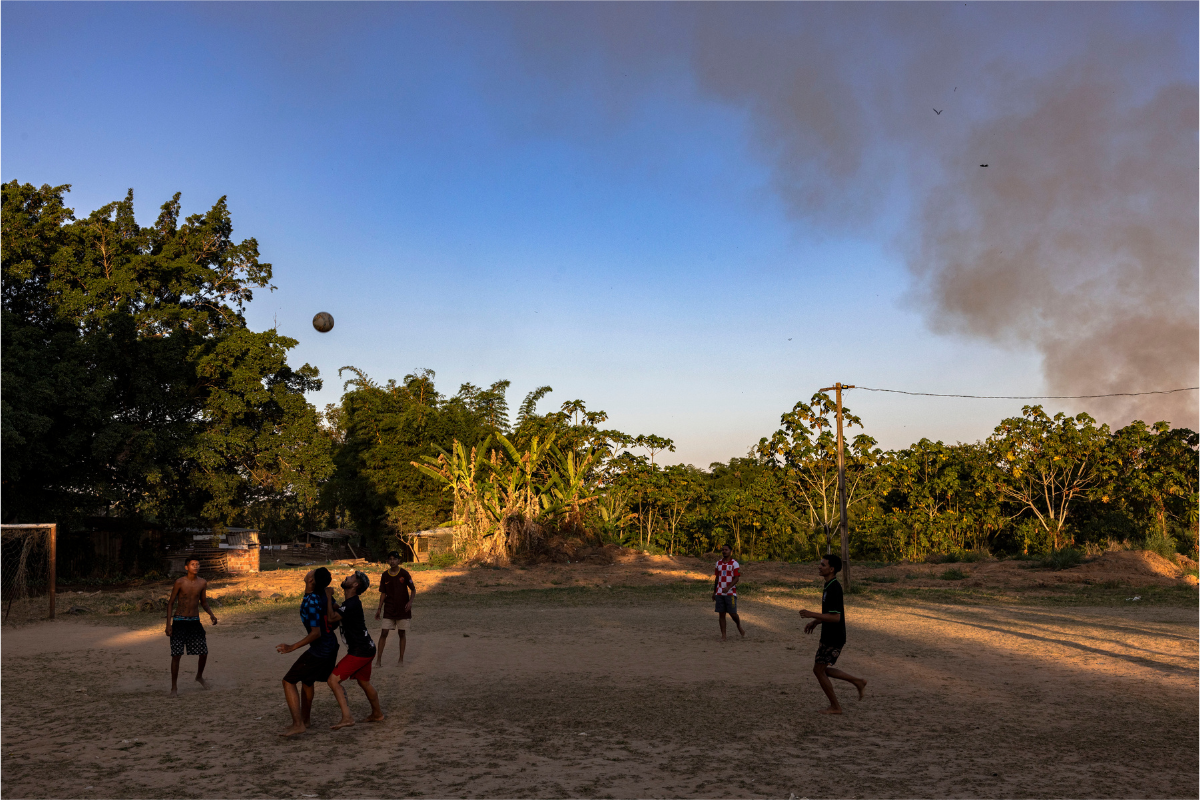
Air pollution is a major global health risk and significantly contributes to climate change, environmental degradation and economic loss. The same activities that produce harmful air pollution — including transport, energy production, agriculture, waste and industry — are also responsible for greenhouse gas emissions and disproportionately affect low-income communities and vulnerable people.
At the same time, evidence shows that action on air pollution can provide significant returns on investment. Targeted interventions can deliver rapid and lasting benefits: reducing illness and premature death, slowing near-term climate warming, and improving economic productivity.
This report provides the latest global assessment of philanthropic foundation funding for outdoor air quality projects. Drawing on comprehensive analysis of funding data from 2019 to 2023, the report shows how philanthropic investment has grown and where gaps remain. We also highlight where targeted funding can make the greatest impact at a time of declining development assistance and increasing global challenges.
The findings show that clean air is one of the most compelling investments available: it is a well-evidenced, high-impact area where additional investment can deliver measurable benefits across health, climate, economic development and equity. Evidence consistently shows that investments in improving air quality yield substantial returns for societies and economies – in many cases delivering significant times their original cost in health and productivity benefits.
Sonia Medina, Chief Ecosystem Development Officer at Children’s Investment Fund Foundation (CIFF)
Philanthropic funding for clean air has increased since 2019, demonstrating growing recognition of the scale of the challenge and the opportunity for impact. Funding more than doubled between 2019 and 2023, although growth slowed between 2022 and 2023 (only increasing by around 2%).
Overall, $478 million of philanthropic funding was spent on air quality projects, which accounts for less than 0.1% of total philanthropic giving globally. With air pollution causing almost 8 million premature deaths each year, the gap between the scale of the problem and the resources dedicated to addressing it remains too wide.
Philanthropic funders can go where governments are not. By backing data, policy innovation and local leadership, funders have helped transform clean air from a marginal issue into a recognised climate and health priority. In Europe, philanthropic‑supported analysis and advocacy helped strengthen health‑based standards and enforcement mechanisms as part of the EU’s revised Ambient Air Quality Directive – one of the most progressive legal frameworks for air quality in the world.
Philanthropic investments can create a positive domino effect: they have catalysed wider action, from stronger public policy to larger flows of public and private finance. In China, long‑term philanthropic support through Energy Foundation China helped embed air quality into national policy, contributing to government‑led reforms and large‑scale public investment in cleaner energy and transport systems.
Founded in 2014, the Green African Youth Organisation (GAYO) is a youth-led advocacy group operating in Ghana, Uganda, and Botswana that works directly with local communities to reduce the climate vulnerability of marginalised groups through youth empowerment, skills development, and public education. Working at the intersection of waste management and social justice, GAYO won the Earthshot Prize 2024 in the “Clean Our Air” category for its zero-waste model, which aims to reduce greenhouse gas emissions and particulate matter pollution in Ghana by 70% and prevent 4,000 tonnes of organic, plastic, and electronic waste from ending up in landfills by 2030. In doing so, the project curbs methane production, reduces greenhouse gas emissions and water contamination, and stops microplastics from leaking into the environment.
Crucially for air quality, waste is diverted from being openly burned. GAYO’s organisational achievements include donating more than 150 air quality monitors to Accra and collaborating with municipal assemblies to establish material recovery facilities and community waste buy-back centres. GAYO has also worked to integrate waste pickers and informal sector waste collectors into Accra’s waste management system and drive behavioural change through continued community engagement. Since 2019, the zero-waste model has benefitted over 5,000 people, created local employment opportunities, and diverted 170 tonnes of waste from landfills in 2023, saving an estimated 3.6 tonnes of CO2 emissions. Much of GAYO’s zero-waste work was catalysed by philanthropic funding, especially from Clean Air Fund, the UMI Fund, and the Global Methane Hub. Its success underscores how philanthropic actions can develop critical infrastructure, enable movement-building, and mitigate resource gaps that may otherwise complicate collaboration.
Philanthropic funding for air quality is concentrated in high-income regions, with North America continuing to receive the largest share of funding. Regions with the highest pollution levels received a much smaller proportion of global investment, with Africa and Latin America receiving only 1% and 2% of funding, respectively.
Organisations headquartered in the Global North tend to allocate a substantial share of their resources within their own regions. For example, funding from the United States to North America accounted for 57% of total air quality funding ($164 million).
Transport attracted the largest share of air quality funding (61%), while crucial sectors like waste, agriculture and household energy remain significantly under‑invested — despite their major health and climate impacts.
The biggest gaps in projects receiving funding are data, monitoring and infrastructure implementation. Only 10% of funding goes to data and monitoring and 9% to implementation, despite 36% of countries not monitoring air quality at all. $4–8m per year invested in air quality data could enable pollution reduction for nearly 1 billion people, according to EPIC.
Foundations focused on climate, energy and the environment provided 73% of philanthropic air quality funding. In contrast, funding from foundations focused on health and social equity declined in 2023, despite air pollution being a key driver of preventable disease and inequality. 25% of funding came from foundations focusing on air quality.
A small group of foundations continues to provide a large share of total philanthropic funding for air quality. Between 2019 and 2023, the ten largest funders accounted for over half of all philanthropic support for outdoor air pollution. This concentration of funders increases the potential impact of widening funder participation.
Philanthropic foundations are particularly well positioned to strengthen progress on clean air.
Download the full report to explore the data, findings and recommendations in detail.